Welcome to
First Churches of Northampton
We welcome all in joyful Christian community.
We listen for God's still-speaking voice.
We work together to make God's love and justice real.

Proud members of the UCC Open and Affirming Coalition and the Association of Welcoming and Affirming Baptists

(W)holy In Between
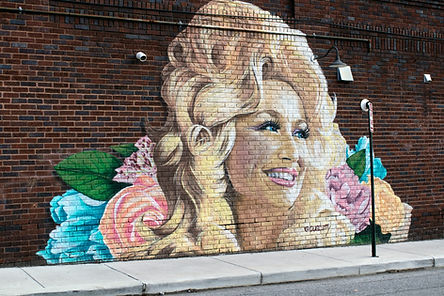
in the back of my mind that Dolly was beautiful, brilliant, generous, and kind, but it was good to read the tributes and pause to contemplate the scope of just how extraordinarily beautiful, brilliant, generous and kind she really was.
It was good to be reminded of how vast her catalogue of music is and hear from so many of the musicians she inspired and helped along the way. It was wonderful to scroll through clips of her acting, her interviews, and her every appearance on the Muppet Show. I was struck, in particular, by her winsome support of the LGBTQ community long before it was trendy or even socially acceptable. She loved the Queer community fiercely and we loved her right back. Can I get an amen!
But it was her philanthropy that really stood out to me. I knew she wrote “I Will Always Love You,” but I didn’t know that she invested the millions she received in royalties from Whitney Houston’s cover into the black community in Nashville. I knew she sent hundreds of millions of books to children all over the world to promote literacy, but I didn’t know it was to honor her father who felt great shame over never having learned to read.
It was good to be reminded that she provided major funding to get the covid vaccine up and out to the public and that she was one of the first to get a shot so people would know it was safe.
Dolly was raised in poverty and yet rose so high she could have died a billionaire. But she didn’t because she gave back. She gave and gave and gave what she earned, what she had, what she could have kept…gave so much of it away that she once admitted that if she was addicted to anything it was the high that comes from generosity. She was one of the helpers Mr. Rodgers told us to look for.
Dolly never got so comfortable with the high life that she forgot where she came from, and there’s something there that I want to dig into because I think it speaks to why we all loved her the way that we did. And when I say all, I really mean all. The idea that Dolly was a force for good, a national treasure, a person we should all seek to emulate, is one of those rare things in this country that almost everyone can agree on.
In one of her reflections this week, Cameron Trimble wrote:
Country musicians and drag queens loved Dolly. Evangelical grandmothers and gay men loved Dolly. Appalachian families and Hollywood stars loved Dolly. People who might not sit together at Thanksgiving could still agree on Dolly Parton.
I wonder how she managed that,” mused Trimble. It wasn’t because she hid who she was or lacked strong beliefs. Dolly was deeply rooted in East Tennessee, her family, her Christian faith, country music, and the culture that shaped her. She never tried to smooth out her edges to please everyone. She just didn’t need others to be like her to care about them.”
“She just didn’t need others to be like her to care about them.”
That’s a whole sermon right there.
“She just didn’t need others to be like her to care about them.”
Dolly Parton had a way about her; a talent for reaching through her music, her words, her actions, to make a wildly diverse variety of people feel seen and welcomed… feel like they mattered, feel like they belonged. To paraphrase Cameron, “She seemed truly happy to be alive (in this world) and glad that (you and you and you) were here too.”
Dolly was unique and her uniqueness gave others permission to be unique as well. She knew what it was to be different, to not belong, to stand out. But rather than apologize for that, she leaned into it and turned it into her super power. She spanned multiple divides. She knew what it was to be raised in one world and inhabit another.
She could have obfuscated that fact. She could have buried her past and reinvented herself once and for all. But instead, Dolly did something far more daring. She remained wholly herself and took up residence somewhere in-between. Dolly became a bridge - someone who could help people on opposite sides find their way to each other - and that’s daring because the truth is that sometimes those people get burned.
On the whole, humanity is not kind to the people who live in between: the ones who don’t conform, the people who don’t fit neatly into categories of race, gender, religion, or class. We can be hard on the ones who speak one language at home and another at school, the ones who were born there but are trying to make a living here, the ones who dare to change their names, their pronouns, their gender, the ones who marry outside the faith be it political or religious We are more apt to take out our fear or resentment on the ones who stand between then see them for the courageous treasures they are.
But, and this is the heart of my sermon, the thing I most want for you to hear - in between people are holy. “They are,” to quote L.R. Knots, “the unsung heroes in a world at war with itself. They are the whisperers of hope that peace is possible.” They don’t just show us the way back to each other across the divides we build, they show us how to bridge the greatest divide of all, the one between heaven and earth, between the world we have created and the world as God would have it be.
Just looks at Moses. That was a long reading this morning, but I felt it was important for you to hear more of Moses’ story. The little Hebrew baby that Pharoah’s daughter pulled from the river last week has grown into a young man who doesn’t fit comfortably anywhere in the world. He is too much a Hebrew to live like an Egyptian and too Egyptian to walk amongst the Hebrews.
And, as is so often the case, because he doesn’t fit comfortably anywhere, he is sensitive to human suffering everywhere. When Moses sees a Hebrew slave being abused by an Egyptian he intercedes and in his attempt to save the one ends up killing the other. The next day, when he sees two of the Hebrews fighting, he tries to intercede again, but his kinsman want so little to do with him that they threaten to expose him for the murder.
So Moses flees to Midian, where he again steps in to protect the seven daughters of a foreign priest who are being harassed by local shepherds. Moses can’t help himself. He doesn’t side with the ones who are like him. He sides with the ones who need him.
Like Dolly, he didn’t need others to be like him in order to care about them. Like her, he didn’t want to see people come to harm. So he used his power to protect and lift up the ones in need.
Interestingly, the fierce desire to act justly and protect the weak that got Moses cast out of his home, becomes the reason the priest Jethro welcomes Moses into his family. By the end of chapter 2, Moses has found a third place, an in-between place, where the values that define him - values he may have learned back home but did not see practiced back home - are being practiced most fully by foreigners of another faith entirely.
I imagine that will resonate for many of us who grew up in Christian homes where we learned that God loves everyone…until we stopped conforming and learned that “everyone” didn’t apply to us. It’s a strange and painful thing to have to leave the place that taught you what to believe in order to remain true to what you were taught. But here we are.
First Churches, for many of us, is our Midian. The style of worship might be different than what we are used to. It doesn’t always feel like home. But at least we know we are welcome here.
Moses found unconditional welcome in Midian, so much so that he married Jethro’s daughter, Zipporah. They have a baby he names Gershom - whose name literally means stranger in a strange land - because that is who Moses is in this place.
Meanwhile, back home in Egypt, things have gone from bad to worse. The old Pharoah dies and a new Pharoah rises. But so, (finally!), does God. God has been pretty quiet up until this point in the book of Exodus, but God is roused now and looking to intercede on behalf of his people.
You might think he’d start with Moses’ brother Aaron, a Hebrew priest back in Egypt. But it would seem that in order for God to intercede, God needs an intercessor, a go between, someone to be God’s mouth piece in negotiations between the Hebrews and the Egyptians. Who better than Moses, the man who doesn’t belong anywhere. The man who grew up in between them all?
Moses is a liminal man in a liminal space…which as we will see is the perfect place for God to break through. Moses is wandering in the wilderness with his sheep when he comes to Mt. Horeb. Horeb literally means wilderness. Moses is in the wilderness squared. He’s literally, spiritually, and figuratively in the butt back of beyond, when he notices the burning bush.
Moses stops. He turns. He observes. As someone pointed out in Bible study this week, you’d have to really spend some time with that bush to see that it is burning but not being consumed. It would have taken time for Moses to realize that this isn’t the result of a random lighting strike or someone’s carelessness, but that something more is going on.
He’s in the middle of the middle of nowhere…but as he waits, as he watches, as he becomes still …something shifts. Slowly but surely the middle of nowhere morphs from nowhere to NOW HERE. God speaks into the NOW. God is HERE. The edge of the world has become the center of the universe, the holy of holies, the throne room of God.
“Moses, Moses!” And he said, “Here I am.” Then God said, “Come no closer! Remove the sandals from your feet, for the place on which you are standing is holy ground. I am the God of your father, the God of Abraham, the God of Isaac, and the God of Jacob.” And Moses hid his face, for he was afraid to look at God.
Friends, God chose an in-between person in an in-between space, a liminal person in a liminal space, to be his go be-tween heaven and earth, God and God’s people, the Hebrews and the Egyptians, oppression and liberation. God chose Moses to be the bridge. And Moses responds:
“Who am I that I should go to Pharaoh, and bring the Israelites out of Egypt?” (And) God said, “I will be with you” (…Ok, not the answer to to the question I asked and plus, I don’t even know who you are,) said Moses, “If I come to the Israelites and say to them, ‘The God of your ancestors has sent me to you,’ and they ask me, ‘What is his name?’ what shall I say to them?” (And) God said to Moses, “I AM WHO I AM.”
Just sit with that a moment. “I AM WHO I AM.” God is who God is. God is present. God is faithful. God is singular, unique, powerful, and necessary. So is Moses. And so, child of God, are you. Moses was who Moses was and you are who you are, uniquely equipped to be who only you can be in this world for the glory of God. That is holy. Moses was holy. You are holy. And God is with you as surely as God was with him.
Moses didn’t fit neatly anywhere in the world and because of that - not in spite of that, but because of that - God was able to use Moses to make a way where there seemed no way for God’s children to go free and find their place in this world.
As I said in the words of welcome, God used Tim Curry that way and God used Dolly that way too. By simply being their own unique selves they made space for others to fully be themselves too. There is just so much healing and liberation in that.
Patrick Burrows, a scholar of theology and ethics, who loves Dollywood so much he’s been over 100 times, was so struck by Dolly’s ability to do this that he wrote an entire chapter in his dissertation about it while studying at Harvard Divinity School. He refers to the holy and liminal space she created around her as the Dollyverse.
You should not see gay and lesbian couples standing next to people with ‘Jesus saved me from my sin’ shirts (in a chapel at a Dollywood or one of her concerts). And yet you (do) (because) Dolly created this space for people who are very different from one another to be different from another,” to co-exist, if you will, in harmony (“In Dolly Parton’s theology, God and acceptance shared the same stage” The Associated Press https://apple.news/AcY92Q8kxSkairZYJc-sIoQ.)
And friends, I can think of no better description of the kingdom of God, the promised land, that place we will all one day call home…a place where people who are very different from one another can just be…be who we are….be different…together.
So thank God for “the bridge-builders, the hand-holders, the light-bringers, those extraordinary souls wrapped in ordinary lives who quietly weave threads of humanity into an inhumane world” as L.R. Knots says. Thank God for Moses. Thank God for Tim. Thank God for Dolly. And thank God for you. May their memory be for a blessing and may you continue to carry that blessing into the world now. May they and all those like them, rest in peace. Amen.